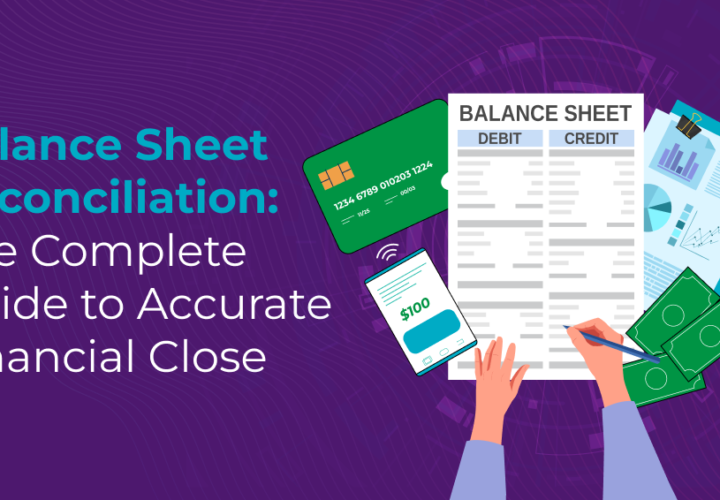
Balance Sheet Reconciliation: The Complete Guide to Accurate Financial Close
Picture this: The last week of the month is in, and your finance team is juggling multiple Excel spreadsheets and refreshing them time and again in the hope that your


 Artificial Intelligence
In the modern corporate setting, effective HR policy management is one of the key elements in ensuring organizational governance and contentment among employees while creating an environment that allows business to run smoothly. Client Overview…
 Artificial Intelligence
Growexx provided a dedicated team that worked as an extended part for an MNC offering business intelligence solutions for big data analytics.
 Artificial Intelligence
GrowExx helped in launching a funding platform to help budding musicians with no strings attached.
 Artificial Intelligence
GrowExx team held a product discovery session to chalk out a product roadmap to create an AI-powered career counselling system.
 Artificial Intelligence
In the heart of Paris, a leading restaurant that has been operating for decades faced a challenge. The reviews by customers were hand-written about their experience at the eatery. Thus, there was a need…
 Artificial Intelligence
In this fast-paced environment of tender acquisition, precision is the keynote to success. This study highlights the transformative partnership between a leading IT Hardware & Networking company and GrowExx, and how innovative solutions completely transformed…
 Agentic AI
An enterprise AI agent has three deployable components: the inference endpoint that runs the model, the orchestration runtime that holds the loop and the state, and the data the agent reads and writes. Deployment architecture is the decision about where…
 Agentic AI
AI agent orchestration is the layer that decides which step runs next, what context it receives, how results are combined, and what happens when a step fails. It sits above the model and below the business process, and it is…
 Agentic AI
The cost of an enterprise AI agent has three components: a one-off build cost, a per-transaction run cost that scales with usage, and a recurring operating cost that scales with the number of agents in production. Any figure presented as…
 Agentic AI
An AI agent’s identity is the credential it authenticates with when it calls a system, and its permissions are the entitlements attached to that credential. In most pilots neither is designed: the agent runs with a developer’s token, a shared…
 Agentic AI
AI agent memory is the set of mechanisms that carry information between a model’s calls: the transcript re-sent on each turn, the state an orchestrator holds for a session, the facts written to durable storage, and the index that retrieves…
 Agentic AI
A single-agent system is one model loop that plans, calls tools and observes results until a task is finished. A multi-agent system splits that work across several loops that pass control, context and results between them. The difference is not…
Picture this: The last week of the month is in, and your finance team is juggling multiple Excel spreadsheets and refreshing them time and again in the hope that your
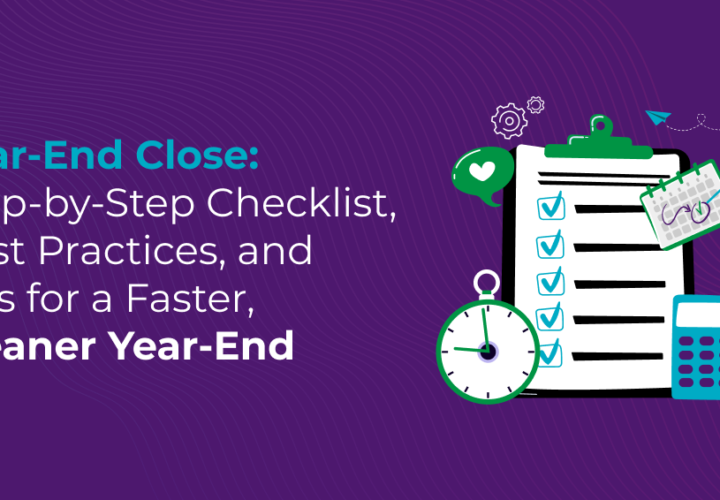
Key Takeaways on Year-End Close: Year-end close finalizes all financial records to ensure accuracy, tax compliance, and audit readiness. Starting early with a rolling close mindset reduces last-minute pressure and
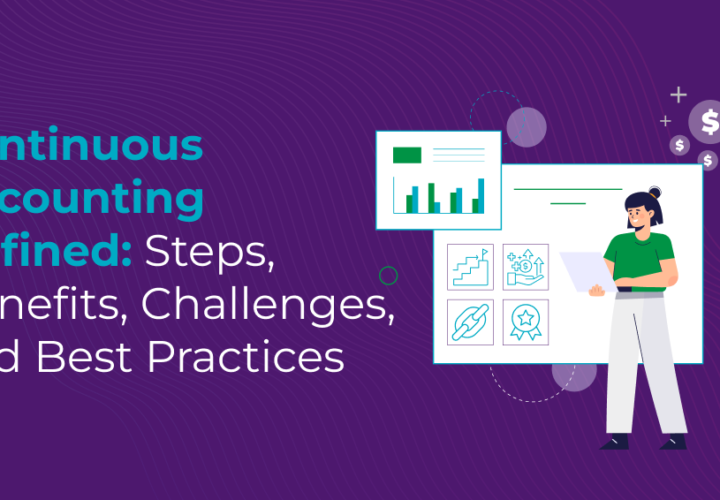
Key Takeaways: Continuous accounting provides real-time financial visibility into cash and performance insights without waiting for month-end reports. Daily automated reconciliation through continuous accounting helps catch errors, variances, and anomalies
Key Takeaways: Financial consolidation is an accounting process of combining the financial statements of a parent company and its subsidiaries into a single, unified set. Financial consolidation provides a holistic

Finance has a way of creating its own vocabulary. Some of them feel familiar; some others sound technical. And some terms sit somewhere in the middle where you know the
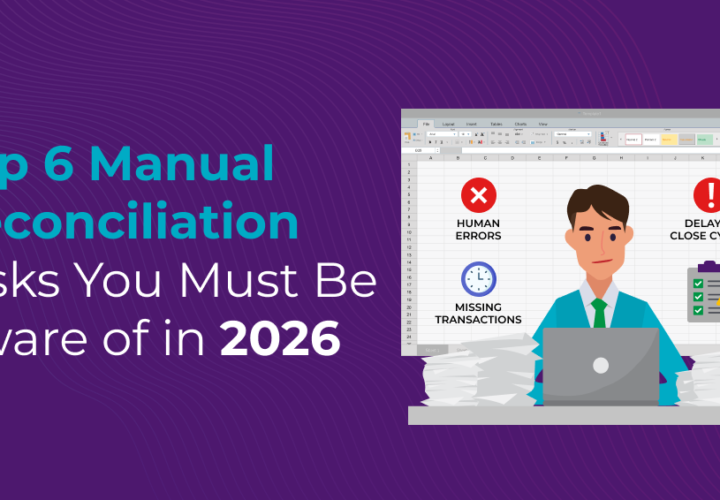
Key Takeaways: Manual reconciliation is the process of verifying transactions across multiple internal and external sources manually. Manual reconciliation leaves your financial records susceptible to human errors, consumes more time,

Key Takeaways: AI reconciliation refers to the use of artificial intelligence to automate and enhance the process of matching and validating financial records. Organizations across the globe are increasingly switching

Key Takeaways: Month-end close is a critical finance process that validates, reconciles, and finalizes monthly financial data to ensure accuracy and audit readiness. Choosing a monthly close over an annual
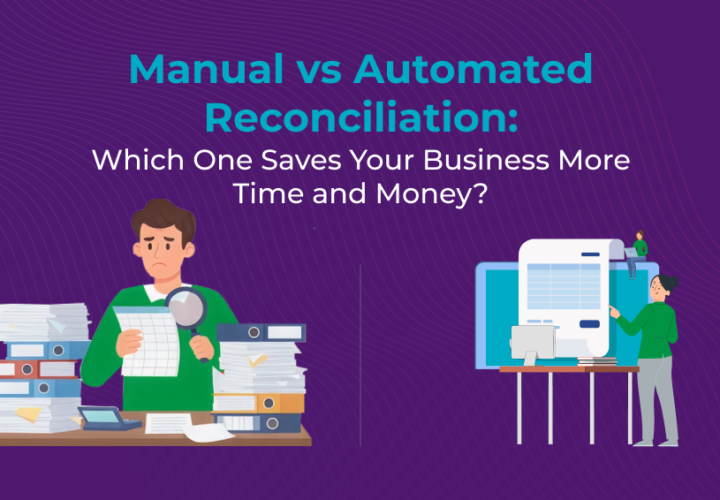
Key Takeaways: Manual reconciliation involves using conventional methods such as pen and paper or Excel spreadsheets. Contrarily, automated reconciliation relies on AI-powered software to match transactions as they occur, i.e.,

Key Takeaways: Inventory reconciliation aligns recorded stock levels with actual physical counts to ensure accuracy and minimize losses. Regular inventory reconciliation prevents stockouts, overstocking, shrinkage, and revenue leakage. Methods of

Key Takeaways: AI account reconciliation uses machine learning to match transactions accurately despite data inconsistencies, continuously improving performance and reducing manual intervention. Weak reconciliation processes result in cash trapped in
Managing your company’s finances isn’t just about balancing the books. It’s about getting the details right. And when it comes to fixed assets reconciliation, accuracy is everything. From machinery and
Key Takeaways: Account reconciliation involves comparing your internal financial records with external documents, such as bank statements, to ensure their accuracy and agreement. The account reconciliation process helps identify and
Are you still juggling numbers between multiple entities, chasing last-minute adjustments, and racing the clock before the month-end closes? If you’re using spreadsheets and emails to reconcile transactions across subsidiaries,
Does your current financial close software help you close books faster, reduce errors, and ease month-end stress? Or is it bogging you down with manual tasks, disorganized data, and workflow


